
Your puppy’s early weeks represent a fleeting window when experiences shape lifelong behavioral patterns. Between 3 and 14 weeks of age, your puppy’s brain remains extraordinarily receptive to new experiences, absorbing lessons about social interaction that determine adult temperament.
Without proper exposure during this narrow period, puppies develop fear-based behaviors, anxiety, and aggression later in life, problems exponentially harder to fix as adults than to prevent during puppyhood. Smart Parke’s Brea facility provides expert-supervised puppy play groups designed specifically for this critical developmental stage.
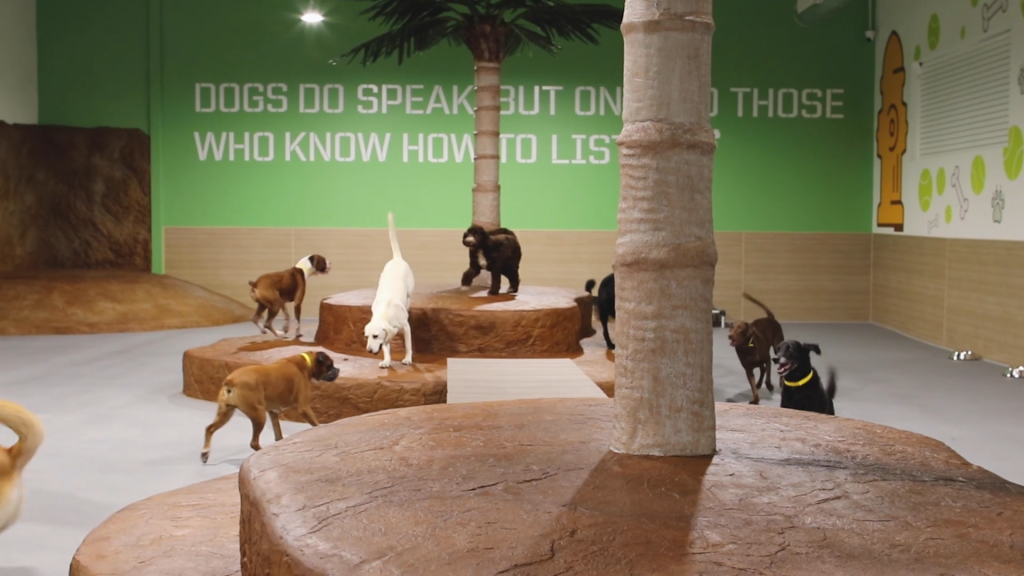
With over 20,000 square feet of climate-controlled indoor space including a dedicated 4,023-square-foot indoor day camp area, trained staff monitoring every interaction, and carefully matched playgroups based on size and temperament, your puppy learns essential social skills in controlled environments.
Schedule your puppy’s evaluation at Brea and give them the behavioral foundation that lasts a lifetime.
Why Puppy Play Groups Are Essential for Your Growing Pup
 Your puppy’s early weeks are critical for development, establishing neural pathways and behavioral patterns that persist throughout their lives. During the sensitive socialization period between 3 and 14 weeks of age, puppies are most receptive to new experiences, people, and other dogs. This narrow window is when puppies’ brains develop social capabilities that will last a lifetime.
Without proper exposure during this time, puppies may develop fear-based behaviors, anxiety, and aggression later in life, problems that are much harder to fix as adults. The neurological mechanisms involve stress hormone regulation and synaptic pruning that become increasingly fixed as puppies mature beyond this window.
Puppy play groups provide supervised, controlled environments where your young dog can learn essential social skills while building confidence. Unlike unstructured dog parks where negative experiences can create lasting fears, professional puppy play groups focus on safety, proper matching of temperament and size, and expert monitoring to ensure positive interactions that support healthy development.
The Science Behind Early Puppy Socialization
Research from the American Veterinary Society of Animal Behavior shows that behavioral issues, not infectious diseases, are the leading cause of death for dogs under three years old. This underscores the importance of early socialization: improper socialization leads to serious behavioral problems that can significantly impact your dog’s quality of life and your relationship with your pet.
Understanding the Critical Socialization Window
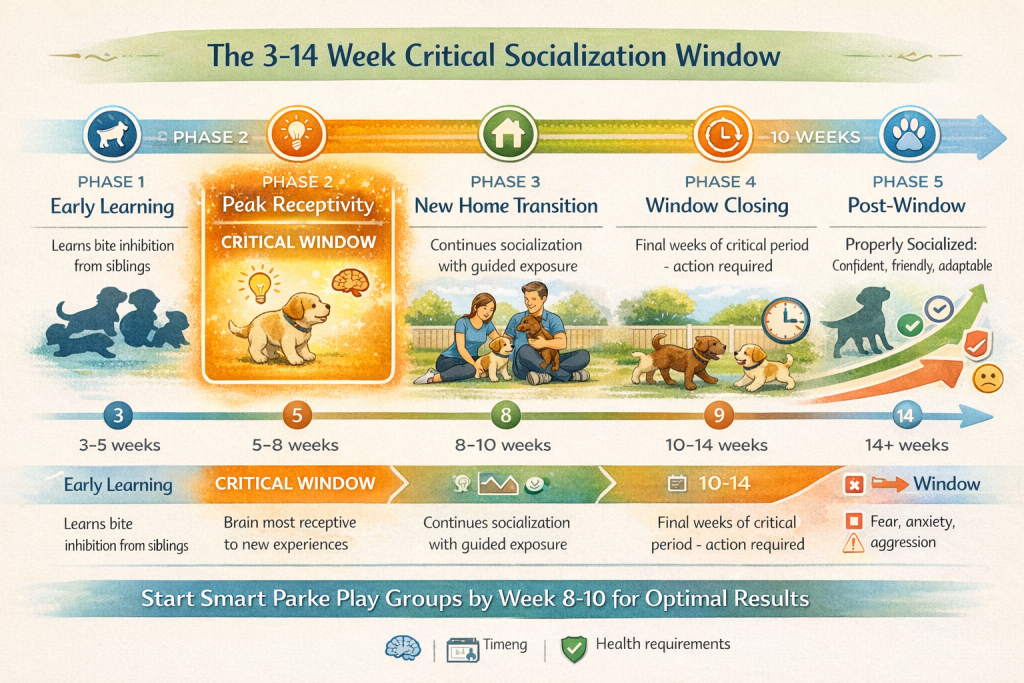
The socialization period begins around 3 weeks of age and closes by approximately 14 weeks, creating a narrow window when puppies remain most accepting, less cautious, and extremely curious about their environment.
This is when puppies are “like sponges,” soaking up lessons about social interaction that will shape their adult personalities. During this period, positive experiences are learned quickly and retain lasting impact throughout the dog’s lifetime. Puppies who experience positive interactions during this period develop into more confident, well-adjusted adult dogs capable of handling novel situations with resilience.
Between 5 and 7 weeks, puppies learn bite inhibition from their littermates and begin developing preferences based on early experiences. By 8 weeks, most puppies transition to their new homes, making this a critical time to continue socialization with carefully selected playmates and environments.
Long-Term Benefits of Early Socialization
Puppies who receive appropriate socialization are significantly less likely to exhibit behavioral problems as adults, including aggression and fearfulness. They engage in more positive social behaviors with humans and can learn new skills faster than unsocialized dogs. These benefits extend throughout their entire lives, creating the foundation for a happy, well-adjusted companion.
Research consistently demonstrates that dogs with strong early socialization handle veterinary visits more calmly, adapt to new environments more readily, and show fewer stress-related behaviors throughout their lives. This psychological resilience proves invaluable during adulthood when dogs encounter travel, life changes, or unexpected situations requiring emotional stability.
What to Expect at Smart Parke Puppy Play Groups
Smart Parke in Brea offers premier doggy daycare designed specifically for young puppies’ developmental needs. Their facility spans over 20,000 square feet of climate-controlled indoor space, providing the perfect environment for supervised puppy socialization. The dedicated 4,023-square-foot indoor day camp area ensures consistent socialization regardless of Brea’s summer heat or air quality concerns.
Supervised Play in a Safe Environment
At Smart Parke, all puppy play sessions are carefully monitored by trained staff members who understand appropriate puppy behavior and development. Staff members watch for proper play dynamics, ensure safety among playmates, and intervene when necessary to prevent negative experiences.
This level of supervision is essential during the sensitive socialization period, where one bad experience can have lasting negative effects on a puppy’s confidence and social development. The facility maintains strict health standards, requiring all puppies to be up-to-date on vaccinations (DHPP, Bordetella, Rabies) and parasite testing (negative fecal test for Giardia within the last calendar year) before participation.
Age and Temperament Matching
Not all puppies are the same, and successful puppy play groups recognize this fundamental truth. Smart Parke groups puppies based on size, age, and temperament, ensuring that shy or smaller puppies aren’t overwhelmed by more confident or boisterous playmates. This matching system helps all puppies, whether naturally outgoing or more reserved, build confidence at their own pace.
Small puppies need playmates who understand gentle interaction, while energetic puppies benefit from companions who match their activity level. This careful curation creates comfortable play experiences where puppies actually enjoy socializing rather than feeling anxious or unsafe.
Climate-Controlled Comfort and Clean Facilities
Puppies are sensitive to temperature extremes and unclean environments that can compromise their developing immune systems. Smart Parke’s climate-controlled facility maintains consistent, comfortable temperatures with 7-8 fresh air cycles per hour. The clean, well-designed spaces provide plenty of room for play, rest areas for tired puppies, and separate zones to prevent overwhelming situations.
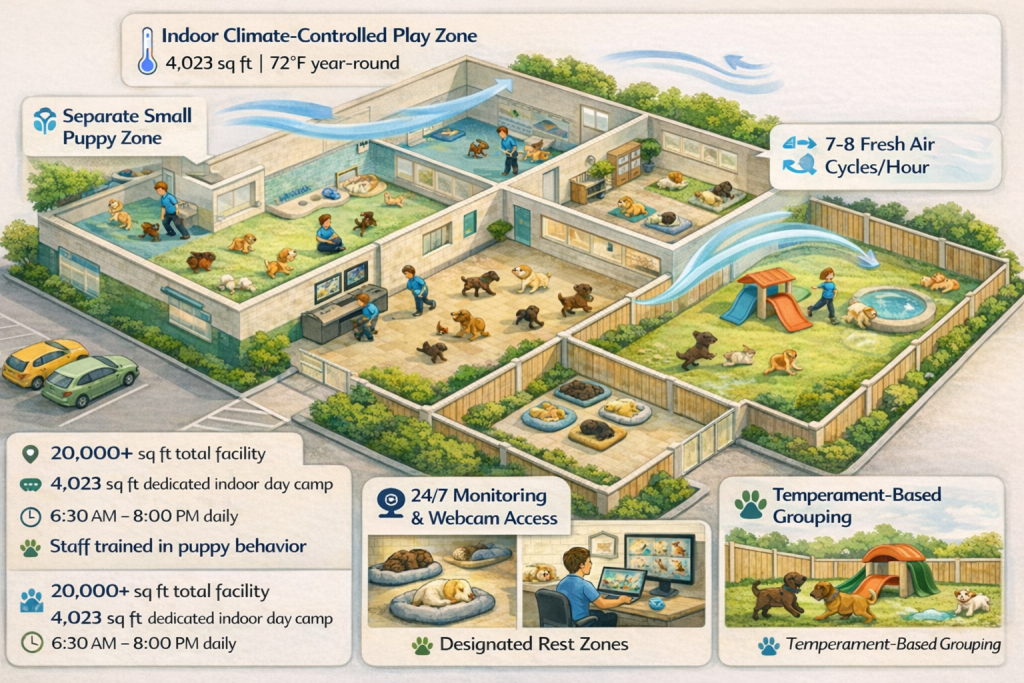
The extensive indoor space proves especially valuable during Brea’s summer months when outdoor conditions become uncomfortable or unsafe for young puppies. This infrastructure ensures your puppy never misses critical socialization opportunities due to weather, maintaining the consistent exposure necessary for optimal behavioral development.
Key Benefits of Puppy Play Groups for Early Development
Professional puppy play groups provide comprehensive developmental benefits extending far beyond simple exercise or entertainment. These structured experiences create neurological foundations supporting lifelong behavioral health and social competence.
Builds Confidence and Reduces Fear
Through positive peer interactions in a safe setting, puppies learn that new situations and unfamiliar dogs aren’t scary, they’re opportunities for fun. This “bounceback” ability, the capacity to recover from initial fear and approach new experiences confidently, is one of the most valuable behavioral traits a dog can develop. Puppies exposed to varied experiences during the critical window become more adaptable and resilient throughout their lives.
Confident puppies become adult dogs who approach novel situations with curiosity rather than fear, handle unexpected changes with stability, and recover quickly from brief stressors. This psychological resilience proves invaluable throughout adulthood when dogs encounter veterinary procedures, grooming appointments, travel, or major life changes.
Teaches Appropriate Social Skills
Play is how puppies naturally learn complex social behaviors. Through supervised play with peers, puppies practice bite inhibition, learn to read dog body language, understand play signals, and develop the ability to take breaks from interaction. These skills are foundational for peaceful coexistence with other dogs throughout their lives.
Puppies discover through immediate feedback when play becomes too rough, receiving corrections from playmates who yelp and disengage. They learn to recognize play bows, whale eyes, and other communication signals that prevent conflicts. Adult dogs with strong early socialization can “read” other dogs accurately, preventing problems through recognition of warning signals.
Provides Essential Physical Exercise
Puppies have abundant energy that needs healthy outlets. Structured play sessions at facilities like Smart Parke allow puppies to burn calories and exercise their growing bodies in appropriate ways. This physical activity reduces the likelihood of destructive behaviors at home and promotes overall health and development.
Properly exercised puppies sleep more soundly, reducing nighttime restlessness and separation anxiety. The physical fatigue from active play creates calmer, more manageable puppies at home who are ready to rest rather than engage in unwanted behaviors like excessive barking or furniture chewing.
Offers Mental Stimulation
Beyond physical play, puppy play groups expose young dogs to new environments, sounds, people, and experiences. This mental stimulation supports brain development and helps puppies become comfortable navigating the complex world they’ll encounter as adults. The cognitive challenge of reading social cues, choosing compatible playmates, and navigating group dynamics prevents boredom while building neural pathways.
Mentally stimulated puppies demonstrate improved learning capacity, better emotional regulation, and reduced stereotypic behaviors like pacing or obsessive licking. This cognitive development proves as important as physical exercise for creating well-adjusted adult dogs.
What Makes Professional Puppy Daycare Different From Dog Parks
 While dog parks seem like logical places for puppy socialization, they present significant challenges that can undermine rather than support healthy development. Understanding these risks helps explain why professional puppy play groups provide superior socialization outcomes.
- Unmatched sizes and temperaments: Large, energetic dogs can unintentionally injure small puppies, and mismatched play styles create negative experiences that establish lasting fear associations.
- Unverified health status: You have no way of knowing if other dogs are vaccinated or healthy, exposing vulnerable puppies to preventable diseases during critical immune system development.
- Limited supervision: With dozens of dogs and few handlers, your puppy’s safety and experience can’t be properly monitored, allowing negative interactions to escalate before intervention occurs.
- High stress potential: Crowded environments overwhelm sensitive puppies and can create lasting anxiety around other dogs and public spaces.
Professional puppy play groups at facilities like Smart Parke address all these concerns through careful management, health verification, expert monitoring, and appropriately sized groups.
The Role of Puppy Training Classes in Socialization
Many pet parents wonder about the relationship between puppy training classes and puppy play groups. While play groups focus on peer interaction and social confidence, training classes teach obedience skills and proper behavior. The ideal puppy development program includes both: socialization through play groups for confidence and peer interaction, plus training classes for learning sit, stay, recall, and other essential commands.
Smart Parke’s comprehensive approach addresses both needs, ensuring puppies develop into well-socialized, well-behaved adult dogs. Board and train programs combine boarding with structured training sessions, while group training classes provide ongoing behavioral development across multiple weeks. Visit the Laguna Woods training page to explore current program options and find the right fit for your puppy’s development needs.
Timing Your Puppy’s First Play Group Experience
Most puppies are ready to begin socialization by 8-10 weeks of age, provided they’ve received their first round of vaccinations and have tested negative for parasites. First-time attendees typically participate in an evaluation session to assess their temperament and ensure proper group matching.
It’s important to start early but not rush. Brief, positive experiences are more valuable than overwhelming your puppy with too much stimulation. A good puppy play group will allow your pup to attend multiple times, meeting different puppies and building confidence gradually.
Smart Parke’s Brea location offers flexible half-day and full-day scheduling options, along with monthly unlimited memberships for families committed to consistent socialization throughout the critical development period. Operating hours from 6:30 AM to 8:00 PM daily accommodate working families’ schedules without forcing rushed drop-offs or pickups. Visit the Brea pricing page to explore current enrollment options.
What Puppy Parents Should Know
Your role in the socialization process extends beyond dropping your puppy off at daycare. Puppy play groups offer excellent opportunities to learn about your dog’s body language, ask questions about development, and receive guidance from trained professionals. Take advantage of these educational moments to understand your puppy’s unique personality and needs.
Additionally, continue socialization at home and in your daily life. Expose your puppy to different surfaces, sounds, people, and environments in a controlled, positive manner. The more varied experiences your puppy has during the critical window, the more adaptable and confident they’ll become.
Smart Parke provides webcam access allowing real-time monitoring of your puppy throughout the day, plus daily report cards documenting developmental progress. This transparency builds trust while helping you understand your puppy’s evolving social skills and confidence levels.
FAQs
At what age can my puppy start attending play groups?
Most puppies can begin attending puppy play groups around 8-10 weeks of age after receiving their first vaccinations and testing negative for intestinal parasites. Early socialization is critical, but health safeguards must be maintained. Smart Parke requires current DHPP, Bordetella, and Rabies vaccinations along with negative Giardia testing before group participation.
How do I know if my puppy is ready for a play group?
A good facility like Smart Parke will conduct an evaluation to assess your puppy’s temperament, confidence level, and comfort with other dogs. This helps ensure proper group matching and positive experiences. The evaluation typically lasts 1-4 hours, allowing staff to understand your puppy’s unique personality before recommending group placement.
What if my puppy is shy or anxious?
Professional puppy play groups are designed to accommodate all temperament types. Shy puppies benefit tremendously from exposure in supportive environments. Trained staff will provide extra encouragement and ensure your pup plays with patient, gentle companions who support rather than overwhelm. Many initially reserved puppies transform into confident, social adults through consistent experiences.
How often should my puppy attend play groups?
Consistency is key. Most puppies benefit from attending 2-4 times per week during their critical socialization period. However, frequency should match your puppy’s individual comfort level and energy. Smart Parke’s unlimited monthly membership provides excellent value for families committed to regular attendance. Visit the Brea pricing page to explore current membership options.
Can my puppy attend play groups before completing all vaccinations?
This is a balance of risk and necessity. Since the socialization window closes by 14 weeks and vaccination schedules aren’t complete by then, properly supervised play groups with health-verified puppies present lower risk than public dog parks. Smart Parke’s strict health requirements minimize disease transmission while allowing critical early socialization.
What’s the difference between puppy play groups and puppy training classes?
Puppy play groups focus on peer interaction, socialization, and confidence building through supervised play. Training classes emphasize obedience, commands, and behavior shaping. An ideal program includes both. Smart Parke offers comprehensive services addressing both socialization and training needs.
How long is the socialization period?
The critical socialization period is between 3 and 14 weeks of age. While socialization continues throughout a dog’s life, this narrow window is when puppies are most receptive to new experiences and when early socialization has the most lasting impact on adult behavior.
What happens if I miss the socialization window?
Puppies not properly socialized during this period often develop fear-based behaviors, anxiety, reactivity, and aggression later in life. These issues are significantly harder to address in adult dogs. Early prevention is far easier than treating behavioral problems requiring extensive rehabilitation once neural pathways become deeply ingrained.
Are puppy play groups at daycare facilities safer than dog parks?
Yes. Daycare facilities verify health status, supervise interactions, match puppies by size and temperament, and maintain clean environments. Dog parks offer none of these protections, exposing vulnerable puppies to unvaccinated dogs, aggressive animals, size mismatches, and disease transmission risks.
What should I look for in a quality puppy play group facility?
Look for health verification requirements, staff training in dog behavior, proper supervision ratios (at least one handler per 4-6 puppies), clean facilities, temperament-based grouping, and camera access so you can monitor your pup. Smart Parke’s 24/7 webcam access, daily report cards, and comprehensive evaluation process exemplify these quality standards.
Your Brea Puppy’s Foundation for Lifelong Success
The critical socialization window closes quickly, but its impact shapes your dog’s entire lifetime. Smart Parke’s Brea puppy play groups provide the expert-supervised environments where positive experiences build confidence, communication skills, and emotional resilience that no amount of adult training can replicate.
The difference between confident, adaptable adult dogs and fearful, reactive ones often traces directly back to early socialization quality. Puppies who learn that other dogs, new people, and unfamiliar situations are safe during critical windows carry that confidence throughout their lives, creating 10-15 years of easier training, more enjoyable companionship, and fewer behavioral challenges.
Schedule your puppy’s evaluation at Smart Parke Brea today and give them the behavioral foundation that transforms puppyhood’s brief weeks into skills that last a lifetime.