
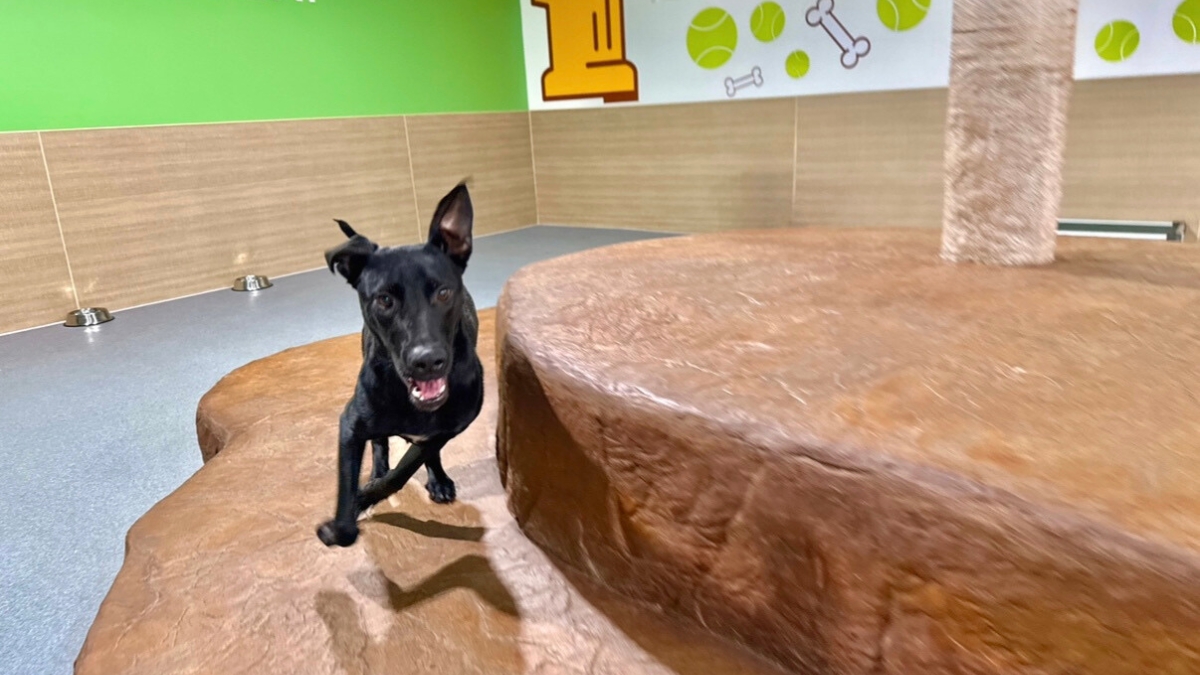
Boarding your puppy for the first time can be an exciting yet nerve-wracking experience for any pet owner. While it may seem convenient to board a young puppy while you travel or handle other obligations, there are important age and health considerations you need to understand before making this decision.
The intersection of immunity development, socialization needs, and emotional readiness creates a complex equation determining when your puppy can safely transition to overnight boarding. Smart Parke, a premium pet boarding facility with locations across California including Laguna Woods, Brea, Corona, and Westlake Village, offers exceptional care for puppies and dogs with specific requirements puppies must meet before overnight stays.
Contact Smart Parke to discuss your puppy’s boarding readiness and schedule an evaluation.
The Minimum Age for Puppy Boarding
The question of when puppies can safely board involves balancing health protection, emotional readiness, and developmental stage considerations. Too early, and you risk disease exposure or traumatic experiences. Too late, and you miss opportunities for positive socialization during critical windows.
General Age Guidelines
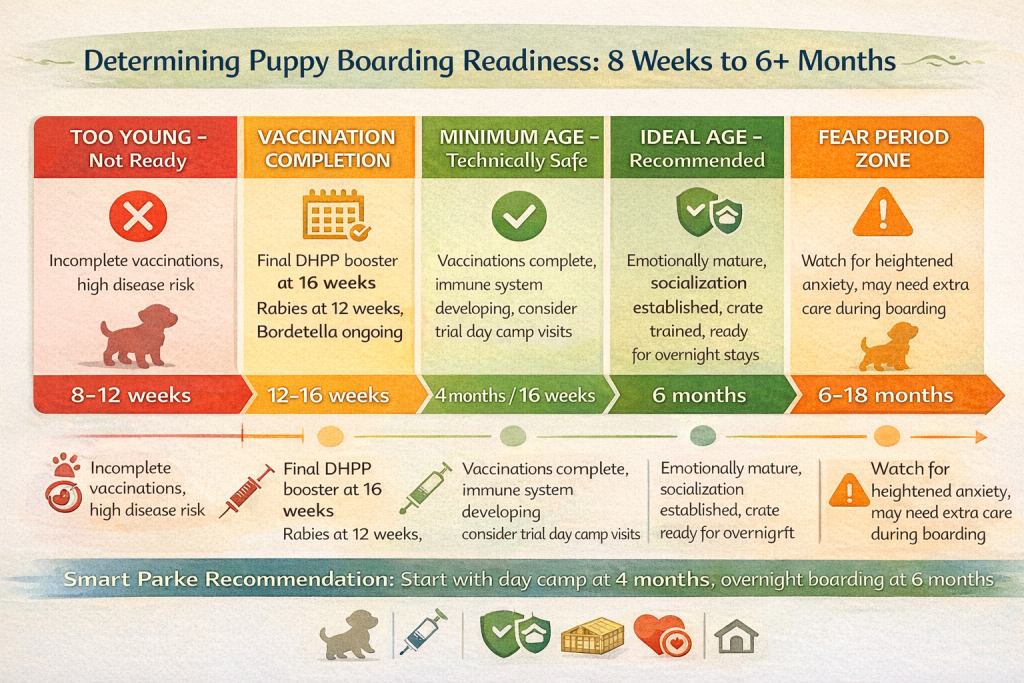
The average minimum age to send your puppy to a boarding facility is around four months old (16 weeks). This age requirement exists for several important reasons related to your puppy’s health, immunity, and developmental stage. At approximately four months, puppies typically have completed their initial vaccination series, which is essential for their protection in shared boarding environments.
However, veterinary experts recommend waiting until your puppy is at least six months old for overnight boarding stays. By this age, puppies have gone through key developmental periods for training and socialization, making them better equipped to handle the stress of being away from their primary caregivers. This additional time allows for proper socialization and helps ensure your puppy is emotionally ready without triggering fear responses.
Why Four Months Is the Standard
Most boarding facilities, including luxury options like Smart Parke, establish a four-month minimum age requirement to ensure the safety and well-being of all their canine guests. At this age, puppies typically have completed their core vaccination series, developed a more mature immune system capable of handling exposure to other dogs, begun basic training and socialization, and reached sufficient size and maturity for group boarding settings.
The final DHPP booster administered around 16 weeks provides crucial immunity against parvovirus, a deadly disease that spreads rapidly in environments where multiple dogs congregate. Without complete vaccination coverage, younger puppies risk serious illness or death from preventable diseases.
Vaccination Requirements Before Boarding
Before your puppy can be admitted to any reputable boarding facility, they must receive several critical vaccinations. These vaccinations are non-negotiable for the health and safety of your puppy and all other dogs at the facility.
Essential Vaccinations Your Puppy Needs
Core Vaccines Required:
The DHPP vaccine (also called DPP or DA2PP) protects against four serious diseases: Distemper, Hepatitis (Adenovirus), Parainfluenza, and Parvovirus. Puppies receive their first shot around eight weeks old, with subsequent booster shots every three to four weeks until they reach 16 weeks of age.
Rabies vaccination is required by law in most states and mandatory for boarding. Puppies typically receive their first rabies vaccine around 12 weeks old. Despite rabies being relatively rare in domestic dog populations, the fatal nature of the disease makes vaccination legally and ethically essential.
Bordetella vaccine protects against kennel cough, a highly contagious respiratory disease that spreads quickly in boarding environments. Puppies should receive this vaccine around six to eight weeks old, with boosters required every 6-12 months.
Additional Recommended Vaccines:
Canine Influenza vaccine is highly recommended by many facilities, particularly in areas where the virus is prevalent. Your veterinarian can advise whether this is necessary based on your location and recent outbreak patterns.
Leptospirosis vaccine is recommended in regions where the disease is common. While not required at all facilities, it provides important protection against a serious bacterial infection transmitted through wildlife urine in soil and water.
Vaccination Timeline and Proof
The standard vaccination schedule for puppies is typically completed by 16 weeks of age when they receive their final booster shot. However, some facilities may require vaccinations to be administered at least 48 hours to 10-14 days before your puppy’s arrival to ensure maximum effectiveness.
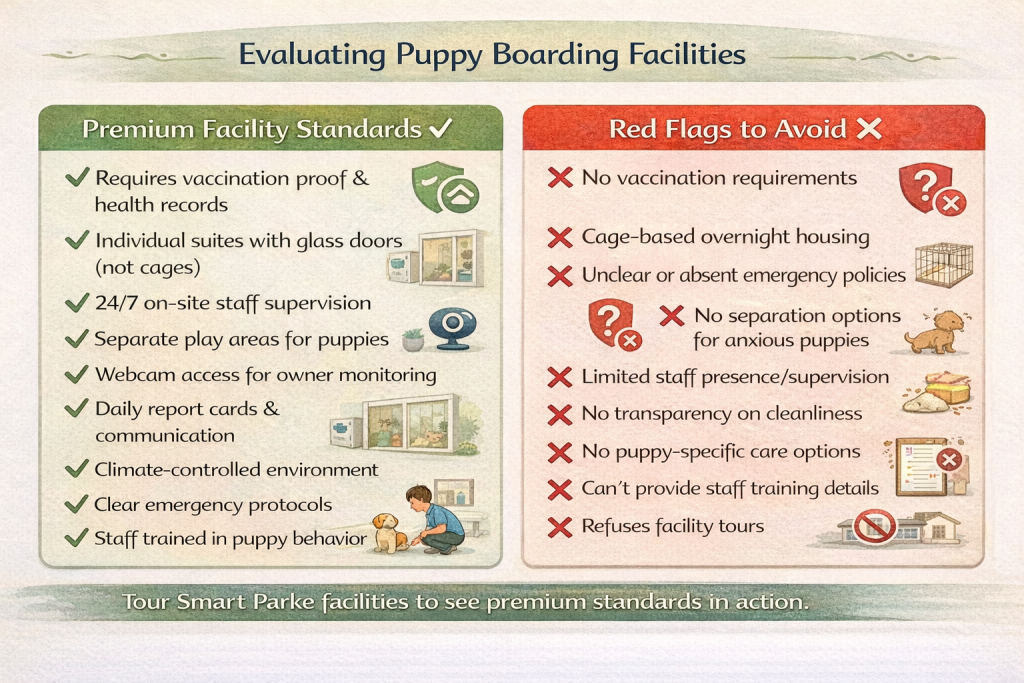
You must bring written proof of all vaccinations to the facility. Reputable boarding facilities will request veterinary records and should refuse admission to any puppy that cannot provide evidence of current vaccinations. If a facility doesn’t require proof of vaccination, this is a red flag that you should choose another location for your puppy’s care.
Health Screening and Pre-Boarding Preparations
Beyond vaccinations, several health and behavioral preparations ensure your puppy’s boarding success. These preparations protect both your puppy and other facility guests while creating positive first experiences.
 Flea and Tick Prevention
Before boarding, your puppy must be flea and tick-free. Most facilities will not admit puppies that show signs of fleas or ticks during intake examination. If your puppy is found to have parasites at check-in, you may be charged an additional treatment fee or turned away entirely.
Start flea and tick prevention measures well in advance of your boarding date. Modern preventatives require 24-48 hours to achieve full effectiveness.
Pre-Boarding Trial Stays
Before committing to an overnight stay, consider scheduling a trial run. Smart Parke offers day camp services that allow your puppy to experience the facility, meet staff members, and interact with other dogs in shorter time frames. This trial period helps you assess how your puppy reacts to the new environment.
Schedule your puppy’s first overnight stay for just one or two nights. This allows you to observe how they adjust to the surroundings, being among other dogs, and being away from you. If your puppy handles this short stay well, longer stays can be arranged with confidence.
Socialization and Training Preparation
A well-socialized puppy will generally do better with boarding than one with limited social experiences. Before boarding, expose your puppy to new people, different environments, sights, and sounds in positive ways. Consider enrolling your puppy in training classes or regular day camp visits to build confidence and social skills.
Basic crate training is also essential before boarding. Without prior crate experience, the confined space of a boarding suite might feel overwhelming and cause anxiety. Introduce your puppy to a crate at home gradually, using positive reinforcement to create a safe, comfortable space.
Choosing the Right Boarding Facility for Your Puppy
Not all boarding facilities offer equal care quality, and the differences prove especially important for young puppies navigating their first boarding experiences.
What to Look for at Premium Facilities
Premium boarding facilities like Smart Parke offer features specifically designed to make your puppy’s stay comfortable and enjoyable. Look for facilities that provide individual suites with glass privacy doors and temperature control, separate play areas for socialization with proper supervision, webcam access so you can monitor your puppy during their stay, and specialized puppy care options including extra play sessions.
Daily report cards documenting your puppy’s behavior and activities provide transparency. On-site dining with quality, stomach-friendly food options prevents digestive upset. 24-hour staff supervision and emergency protocols ensure immediate response if health issues arise. Smart Parke’s facilities maintain continuous on-site staffing, providing security during overnight hours.
Red Flags to Avoid
Be cautious of facilities that don’t require proof of vaccination, use only cages for overnight boarding instead of suites, don’t offer separation options for anxious or very young puppies, have unclear policies about handling medical emergencies, don’t provide information about staff training or experience with young puppies, or aren’t transparent about their cleanliness and health protocols.
Potential Concerns About Early Puppy Boarding
While boarding can provide valuable socialization and care, certain developmental considerations warrant careful timing and approach.
The Critical Socialization Period
The ideal time to bond with your puppy is during their critical socialization period, which occurs between 4 and 16 weeks of age. Extended boarding stays during this crucial window might cause you to miss out on important bonding time that shapes your puppy’s behavior and attachment to you. Consider shorter stays or alternative care options if your puppy falls within this age range.
Potty Training and Behavioral Development
Long boarding periods can potentially stall your puppy’s progress with potty training and basic obedience. Puppies require frequent bathroom breaks and consistent training routines. If a facility forces your puppy to soil their sleeping area due to insufficient potty breaks, this can actually create setbacks in housetraining progress.
Fear Periods and Anxiety
Most puppies go through a fear period of heightened anxiety between six months and about a year and a half. During this sensitive developmental stage, a negative boarding experience could spook your puppy and create lasting anxiety or fear-related behaviors. Be particularly cautious about boarding during this period.
FAQs
Can I board my 8-week-old puppy?
No, eight weeks is far too young for boarding. Puppies this age haven’t completed their vaccination series and are highly susceptible to contagious diseases like parvovirus. In-home pet sitters or staying with trusted family members is a better option for very young puppies.
What’s the difference between day camp and overnight boarding?
Day camp is a shorter-term service where your puppy spends several hours during the day in supervised play and socialization. Overnight boarding includes a full night’s stay in a private suite with sleeping accommodations. Day camp can be an excellent intermediate step before attempting overnight boarding.
Will my puppy be traumatized by boarding?
Most well-socialized, healthy puppies handle boarding well, especially if they’ve had positive trial experiences. However, every puppy is different. Dogs with anxiety disorders or those with limited socialization may struggle more. Start with short stays and increase duration as your puppy becomes comfortable.
What should I bring when I drop off my puppy?
Bring vaccination records, any medications or special food your puppy requires, a favorite toy or blanket from home, and detailed information about your puppy’s routine and preferences. Most facilities provide high-quality food, but you can provide your own if preferred.
How often should my puppy be let outside for potty breaks during boarding?
Young puppies typically need to go outside every 2-4 hours. Discuss your puppy’s specific needs with the facility before boarding. Premium facilities like Smart Parke can accommodate frequent potty breaks and will work with you to maintain your puppy’s training progress.
Is boarding better than hiring a pet sitter for my young puppy?
This depends on your puppy’s age, temperament, and socialization level. Very young puppies (under 4 months) are better served by in-home pet sitters. Puppies 4-6 months old might benefit from a combination of in-home care and supervised day camp. Puppies over 6 months who are well-socialized generally do well with boarding at reputable facilities.
Your Puppy’s First Boarding Experience
When you’re ready to board your puppy for the first time, ensure they’ve met all age and vaccination requirements and have had positive socialization experiences. Smart Parke’s expert staff and premium facilities provide a safe, comfortable environment for puppies making the transition to boarding, offering peace of mind during your time away.
Contact Smart Parke to discuss your puppy’s specific needs and schedule a facility tour. Call your nearest location: Laguna Woods at (949) 330-2288, Brea at (562) 647-8011, Corona at (951) 268-1050, or Westlake Village at (818) 889-2275.