
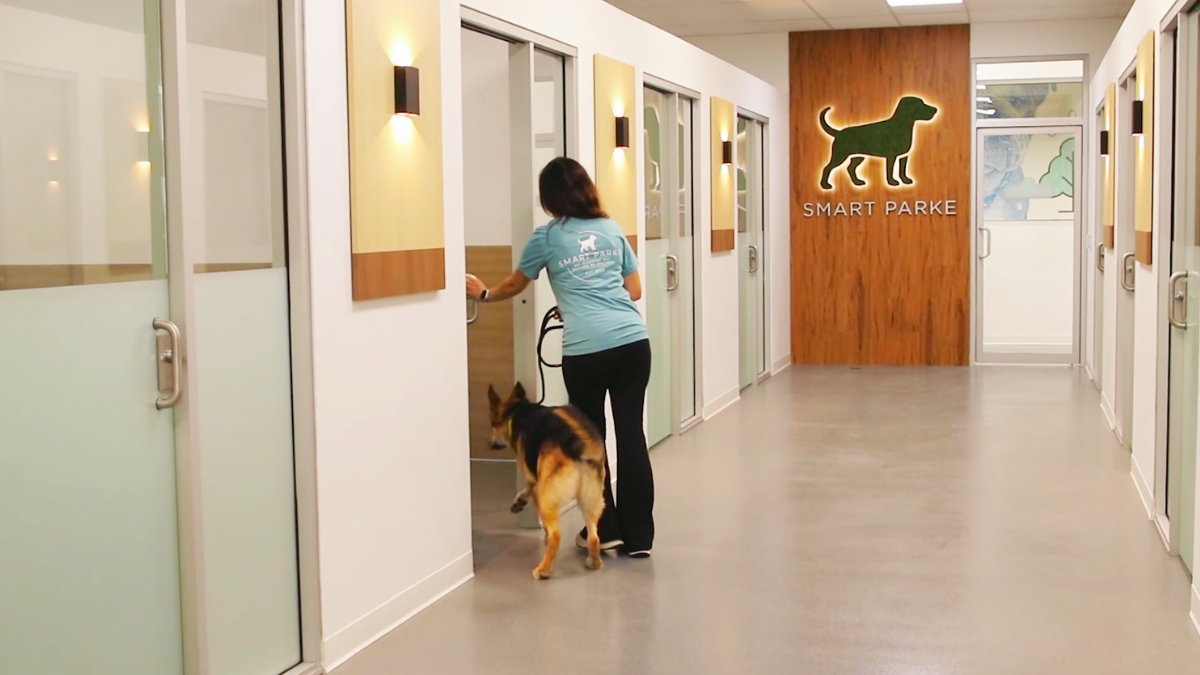
Preparing your dog for boarding requires thoughtful planning and gradual acclimation that addresses both physical health requirements and emotional readiness. Whether it’s your first time leaving your furry friend or you’re a seasoned traveler, understanding how to prepare your dog for boarding ensures a smooth, stress-free experience for both you and your pet.
The difference between a traumatic separation and a positive adventure often traces back to preparation quality in the weeks preceding your departure. This comprehensive guide walks you through essential preparation steps, veterinary requirements, emotional readiness, and practical tips to make your dog’s boarding stay comfortable and enjoyable.
Smart Parke’s California locations in Laguna Woods, Brea, Corona, and Westlake Village provide premium boarding services designed to support well-prepared dogs, creating experiences that build confidence rather than anxiety. Schedule a facility tour to discuss your dog’s specific needs and begin the preparation process.
Dogs are Creatures of Habit
Dogs are creatures of habit, and sudden changes in routine can trigger stress and anxiety that manifests through destructive behaviors, appetite loss, or withdrawal. The boarding environment, while professionally managed, represents a significant departure from familiar home surroundings, introducing new sights, sounds, smells, and social dynamics that unprepared dogs find overwhelming.
 Why Preparation Matters
A well-prepared dog will experience fewer behavioral issues, sleep better, and enjoy their boarding stay more fully rather than simply enduring it. Preparation helps your dog build confidence and independence while also giving you the peace of mind knowing they’ll be well-cared for without suffering from preventable anxiety.
Dogs who approach boarding with established coping mechanisms and positive associations demonstrate measurably lower stress markers than dogs thrust into boarding without gradual introduction.
The Benefits of Starting Early
Beginning your preparation weeks in advance, rather than days before, allows your dog to gradually adjust to the idea of boarding through incremental exposure. This phased approach reduces anxiety and helps your dog understand that you always return, building emotional resilience for their stay away from home.
Early preparation also provides buffer time for completing vaccination requirements, scheduling facility tours, and addressing any behavioral concerns that emerge during trial separations.
Veterinary Requirements and Health Checkups
Most reputable boarding facilities require updated vaccinations before your dog’s stay, creating a protective barrier against contagious diseases that spread rapidly in environments where multiple dogs congregate.
Understanding these requirements allows you to schedule appointments appropriately and avoid last-minute vaccination rushes that disrupt optimal immunity development timelines.
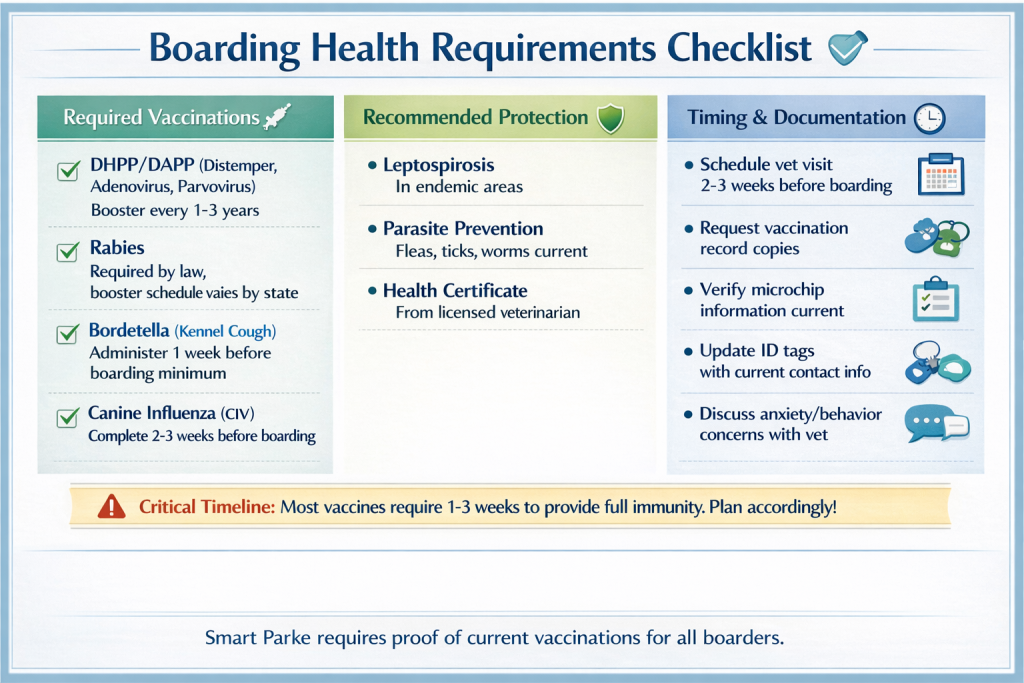
Essential Vaccinations
DAPP/DHPP Vaccine protects against Distemper, Adenovirus, and Parvovirus, diseases that can prove fatal to unvaccinated dogs. Adult dogs require boosters according to veterinary recommendations, typically every 1-3 years depending on vaccine type and risk factors.
Rabies Vaccine is required by law in most states and mandatory for boarding at all reputable facilities. Dogs receive initial vaccination around 12-16 weeks, with boosters required according to state regulations and veterinary protocols.
Bordetella (Kennel Cough) Vaccine is essential for dogs around other dogs, requiring administration at least one week before boarding to achieve protective immunity. While kennel cough rarely proves fatal, it causes significant respiratory discomfort and spreads rapidly through airborne transmission in boarding environments.
Leptospirosis Vaccine protects against serious bacterial infections transmitted through wildlife urine in soil and water. Recommended in regions where the disease is common, this vaccine provides important protection for dogs with outdoor access during boarding stays.
Canine Influenza Virus (CIV) Vaccine is important for dogs exposed to other dogs, ideally completed 2-3 weeks before boarding to allow full immunity development. The vaccine covers H3N8 and H3N2 strains, both capable of causing serious respiratory illness.
Schedule your veterinary appointment at least 2-3 weeks before your planned boarding date to allow your dog’s immune system time to build protection after vaccination.
Parasite Prevention and Health Screening
Ensure your dog is currently on parasite prevention, including flea, tick, and worm treatments administered according to your veterinarian’s recommended schedule. Request a copy of your dog’s vaccination records and health certificate to present at the boarding facility during check-in. If your dog takes medications, provide an adequate supply along with clear dosing instructions in original labeled bottles.
Pre-Boarding Veterinary Visit
During your pre-boarding vet visit, discuss any behavioral concerns, anxiety issues, or special medical needs that might affect your dog’s boarding experience. Your veterinarian can recommend anxiety-relief options if your dog is particularly nervous about separation or unfamiliar environments, including supplements, training approaches, or medications that support successful boarding transitions.
Emotional and Behavioral Preparation
Physical health requirements represent only half the preparation equation. Emotional readiness determines whether your dog experiences boarding as adventure or ordeal, making behavioral preparation as important as vaccination completion.
Acclimate Your Dog to Alone Time
Start practicing short periods of separation weeks before boarding. Leave your dog alone for 15-30 minutes initially, then gradually extend the duration over subsequent practice sessions. This trains your dog to remain calm when separated and demonstrates that you always return, establishing trust that carries over to boarding situations.
Slowly building independence reduces separation anxiety during actual boarding stays. Dogs who’ve never experienced extended separations struggle more than dogs accustomed to periodic alone time through gradual exposure training.
Consider a Trial Stay
If your dog is prone to anxiety or has never been boarded, schedule a short trial stay, ideally 24 hours, at your chosen facility. This allows your dog to acclimate to the environment, meet staff members, and build familiarity with the space before longer stays. A positive first experience significantly increases the likelihood of successful future boarding stays.
Smart Parke’s day camp services provide excellent intermediate steps between home and overnight boarding. Dogs can experience the facility, interact with staff and other dogs, then return home the same day, building confidence through graduated exposure.
Maintain Consistent Routines
In the days leading up to boarding, maintain your dog’s regular schedule for feeding, walks, and playtime. Consistency provides emotional stability and reduces stress that compounds when multiple changes occur simultaneously. Inform the boarding facility about your dog’s routine preferences so they can maintain continuity during the stay, minimizing disruption.
Managing Your Own Emotions
Dogs are sensitive to human emotions and will mirror your anxiety or hesitation about boarding. Practice staying calm and upbeat when discussing the boarding stay, using a cheerful tone and positive body language to signal that boarding is a good experience. On drop-off day, keep your goodbye brief and affectionate, similar to leaving them with a trusted friend. Avoid long, emotional goodbyes that can build anxiety and create negative associations.
Facility Selection and Pre-Boarding Communication
Not all boarding facilities offer equal care quality, and selecting the right environment for your dog’s temperament and needs significantly impacts their boarding experience. Taking time to research, visit, and evaluate facilities before booking prevents problems that arise from mismatched expectations or inadequate care standards.
 Researching and Selecting a Facility
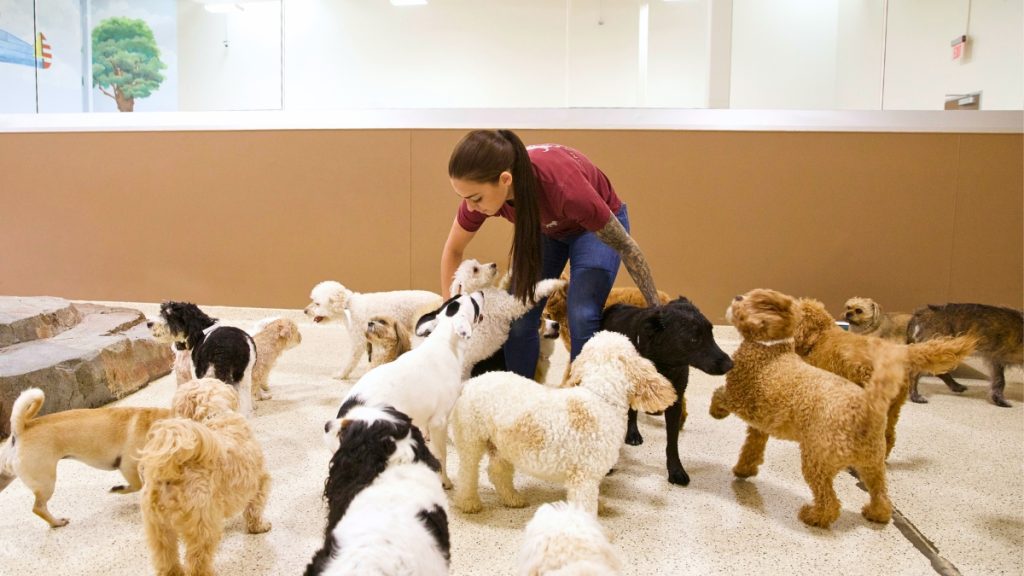
Visit potential boarding facilities in advance to assess cleanliness, safety, and overall environment. Look for facilities with well-maintained, clean spaces with good ventilation, spacious suites rather than cages, temperature-controlled accommodations protecting against heat and cold stress, webcam access for monitoring your dog, staff trained in animal behavior, veterinary partnerships for medical emergencies, and positive online reviews.
Smart Parke’s facilities exemplify these standards with resort-style accommodations featuring glass-door privacy suites, 24/7 on-site supervision, and comprehensive enrichment programs designed for different temperaments and energy levels.
Understanding Facility Policies and Services
Before booking, ask detailed questions about food options and dietary accommodations, items you can bring from home, emergency procedures and veterinary access, daycare and play options included with boarding, special care for anxious or aggressive dogs, staff supervision ratios and experience levels, bathing and grooming services, and cost structure including additional add-ons.
Schedule a Pre-Visit Tour
Bring your dog to tour the facility or arrange an introductory visit if possible. Allow your dog to meet staff members and experience the space, which helps build familiarity before an overnight stay. Use this opportunity to discuss your dog’s specific needs, behavioral quirks, and any special requirements requiring staff awareness or accommodation.
Packing and Preparing Physical Items
Thoughtful packing helps your dog feel more comfortable in unfamiliar environments by providing sensory connections to home. However, overpacking or bringing inappropriate items can create problems, making strategic selection important.
Comfortable Bedding and Familiar Items
Pack comfort items from home to ease the transition: a well-loved blanket or bed clearly labeled with your dog’s name, favorite toys (soft toys without squeakers to avoid distraction), an unwashed T-shirt or item with your scent providing olfactory comfort, and regular food and treats in original packaging.
These familiar items provide psychological comfort and a sense of security, making the facility feel more like a home away from home. However, avoid bringing irreplaceable items that could be lost or damaged during the stay.
Food and Dietary Items
Most boarding facilities provide quality house cuisine formulated to prevent digestive upset common when dogs experience stress or dietary changes. However, if your dog requires a special diet or has a sensitive stomach, bring an adequate supply of their regular food in original packaging.
Discuss food transition carefully with the facility. Sudden dietary changes can cause stomach issues that compound boarding stress. If possible, introduce the facility’s food at home before boarding to allow digestive adjustment and identify any sensitivity issues before your departure.
Medications and Medical Supplies
If your dog requires medications, provide complete supply in original labeled bottles, clear written dosing instructions with times, information about potential side effects, storage requirements (refrigeration if necessary), and your veterinarian’s contact information for questions or emergencies.
Label all items clearly with your dog’s name and your contact information to prevent mix-ups with other boarders’ belongings.
Updated ID Tags and Microchip Information
Ensure your dog wears an updated ID tag with current phone numbers and address. Verify that your microchip information is current and matches your contact details. This is critical in case of any emergency or if your dog somehow escapes the facility during their stay.
Practical Preparation Steps and Timeline
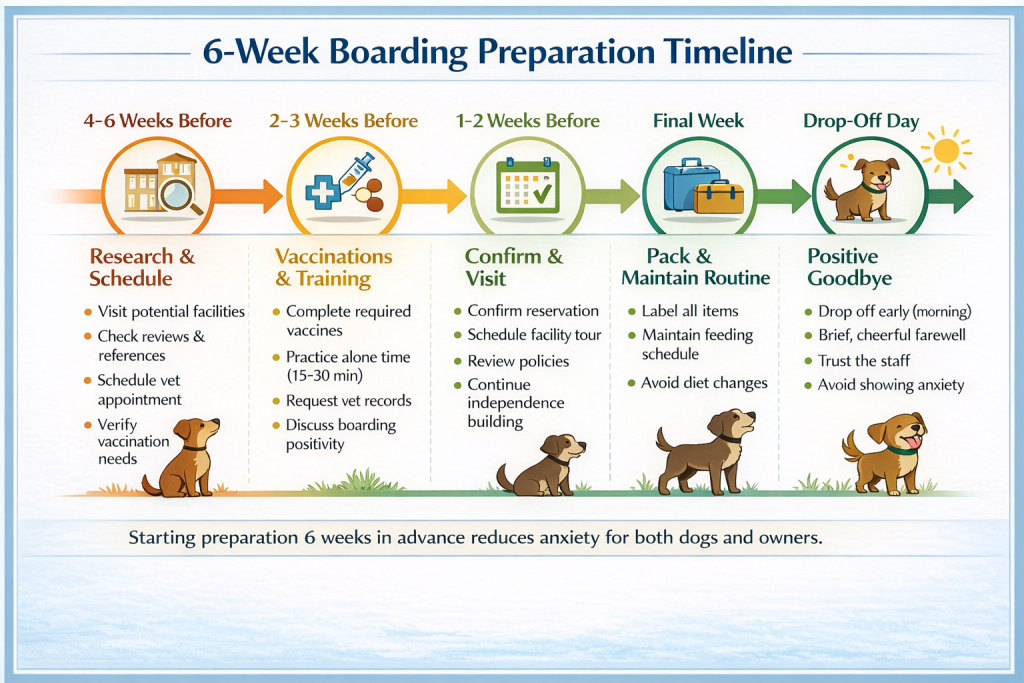
Following a structured timeline ensures all requirements are met without last-minute scrambling that increases stress for both you and your dog.
4-6 Weeks Before Boarding: Research and visit potential facilities, check online reviews and contact references, verify vaccination requirements, schedule veterinary appointments if vaccines are needed.
2-3 Weeks Before Boarding: Complete all required vaccinations, practice alone time with your dog (15-30 minute sessions), request copies of vaccination records from your vet, begin discussing boarding positively with your dog.
1-2 Weeks Before Boarding: Confirm reservation and facility details, schedule pre-visit tour or introductory visit, review facility policies and special requests, continue building independence with alone time.
Final Week Before Boarding: Maintain consistent routine with feeding and exercise, avoid sudden changes to diet or environment, pack items and label everything, prepare written care instructions.
Drop-Off Day: Drop off early in the morning to allow adjustment time before nightfall, keep goodbye brief and positive, don’t show anxiety or sadness, trust the facility and staff to care for your dog.
Special Considerations for Anxious Dogs
Some dogs require additional preparation and accommodation due to temperament or history. Recognizing anxiety signs early allows you to implement appropriate interventions before boarding day arrives.
Recognizing Anxiety Signs
Signs that your dog may struggle with boarding include excessive clinginess or separation distress at home, destructive behavior when left alone, hyperactivity or difficulty settling, inability to eat or drink in unfamiliar settings, and excessive barking or whining.
Professional Support Options
Discuss anxiety management with your veterinarian. Options may include calming supplements or medications (Trazodone, anxiety aids), behavior modification training prior to boarding, extended trial stays to build confidence, private boarding options that minimize social stress, and daycare attendance before overnight stays.
Choosing Appropriate Boarding Options
For anxious dogs, some facilities offer private suites with one-on-one staff interaction instead of group daycare. This reduces stimulation and allows your dog to decompress in a quieter environment. Discuss these options when selecting your facility to ensure an appropriate match with your dog’s temperament.
Post-Boarding Expectations
Your dog may exhibit temporary behavioral changes after returning home, including increased clinginess or neediness, lethargy or fatigue, changes in appetite or water consumption, mild diarrhea or digestive changes, or excitement and hyperactivity. These reactions are normal responses to the exciting experience and adjustment back home. Most dogs return to normal within 2-3 days.
However, if behavioral changes persist beyond a few days or concern you, contact your veterinarian. To build confidence for future stays, celebrate your dog’s return with positivity and praise while avoiding making a huge fuss that reinforces the idea that separation was traumatic.
FAQs
What’s the best age to board a dog?
Dogs can typically be boarded starting around 4-6 months of age, once initial vaccination series are complete. Senior dogs (over 13 years) may require special accommodations and should be evaluated individually. Always discuss your dog’s age and health with your veterinarian before first boarding.
How long before boarding should I update vaccinations?
Most facilities require vaccinations to be completed at least 2-3 weeks before boarding to allow time for immunity development. Bordetella vaccine needs only 1 week advance notice, while CIV vaccine ideally requires 2 weeks prior to provide adequate protection.
Can I bring my dog’s own food to the boarding facility?
Yes, most facilities allow you to bring your dog’s regular food for an additional fee. Discuss dietary requirements during your pre-visit consultation to understand policies and storage capabilities.
Will my dog be lonely during boarding?
Quality boarding facilities provide socialization through daycare, play sessions, and staff interaction. Webcam monitoring allows you to observe your dog’s activities. Private suite options with one-on-one attention are available for dogs who prefer solitude over group play.
What should I do if my dog has separation anxiety?
Start preparation early with short alone-time sessions building gradually. Consider a trial boarding stay, discuss medication options with your vet, and select a facility offering private suites or limited-group interactions. Some dogs benefit from boarding after attending daycare at the same facility.
How do I handle a difficult drop-off?
Keep the drop-off brief and positive. Dogs sense parental emotions, so remain calm and cheerful. Avoid prolonged goodbyes, which can increase anxiety. Trust the staff and understand that dogs often settle quickly once parents leave the premises.
What if my dog has medical conditions or special needs?
Inform the facility in advance about all medical conditions, medications, and special care requirements. Provide detailed written instructions and copies of medical records. Ask about the facility’s experience with specific conditions and veterinary partnerships ensuring appropriate care.
Can I board a dog-aggressive dog?
Some facilities offer private boarding for dog-aggressive dogs without daycare participation. This allows them to stay safely while avoiding conflicts with other dogs. Discuss behavioral issues openly with facility staff to ensure appropriate accommodation and safety protocols.
How often should I board my dog?
Frequency depends on your dog’s temperament and your travel needs. Regular boarding, even monthly short stays, helps dogs maintain familiarity with facilities and reduces anxiety. Positive repeated experiences build confidence and create dogs who view boarding as adventure rather than ordeal.
What’s the difference between boarding and daycare?
Boarding involves overnight stays with sleeping accommodations, meals, and 24-hour supervision. Daycare provides daytime care and socialization with drop-off and pickup the same day. Many facilities offer both services, and daycare attendance often prepares dogs well for boarding transitions.
Smart Parke Boarding Services
Smart Parke offers resort-style dog boarding with premium accommodations designed for your dog’s comfort and safety. Their facilities feature spacious, cage-free suites with privacy glass doors, temperature-controlled rooms with fresh air circulation, premium orthopedic bedding for comfortable rest, house-made cuisine formulated to prevent digestive upset, included half-day daycare or one-on-one play sessions, webcam access and daily report cards, professional grooming and bathing services, and 24/7 staff supervision with veterinary partnerships.
With multiple California locations and flexible suite options (Classic, Luxury, and Private), Smart Parke accommodates dogs with various temperaments and needs. Contact your nearest location to begin planning your dog’s boarding experience: Laguna Woods at (949) 330-2288, Brea at (562) 647-8011, Corona at (951) 268-1050, or Westlake Village at (818) 889-2275.